


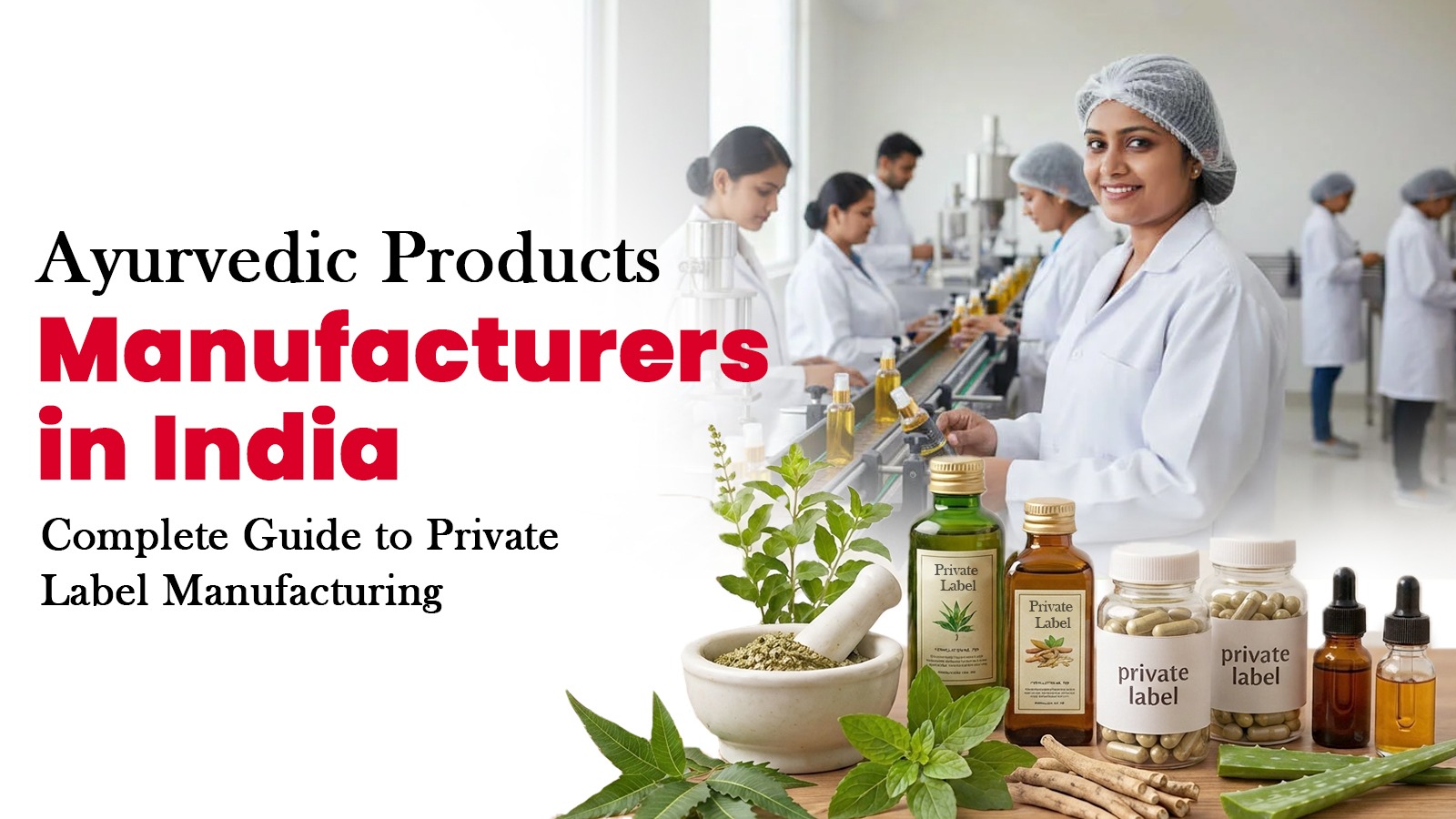
Ayurvedic Products Manufacturers in India: Complete Guide to Private Label Manufacturing
Finding reliable ayurvedic products manufacturers is an important step for businesses planning to launch their own Ayurvedic, herbal, or wellness product brand. Instead of investing in a manufacturing facility, equipment, technical teams, and production infrastructure, businesses can partner with an experienced private label or third-party manufacturer to develop and manufacture products under their own brand name.
Private label Ayurvedic manufacturing can cover multiple stages, including product selection, formulation, manufacturing, quality testing, packaging, labeling, documentation, and delivery. PurshVeda Connect provides private label and third-party Ayurvedic manufacturing support designed to help entrepreneurs, clinics, doctors, distributors, wellness businesses, and established brands launch and expand their product portfolios.
What Is Ayurvedic Private Label Manufacturing?
Private label manufacturing allows a business to sell an Ayurvedic product under its own brand while a manufacturing partner handles production.
For example, a business may select an existing Ayurvedic formulation, customize the packaging and branding, and have the product manufactured and packed by a third-party manufacturer. The finished product can then be marketed under the business's own brand.
This approach can help businesses enter the Ayurvedic market without building a complete manufacturing facility from the beginning.
Private Label vs. Third-Party Manufacturing
Although the terms are sometimes used interchangeably, there can be differences in how businesses use them.
Private Label Manufacturing:
The manufacturer generally provides existing formulations that can be sold under the customer's brand, with options for packaging and branding customization.
Third-Party Manufacturing:
A business outsources manufacturing to another licensed manufacturer. Depending on the arrangement, the product may use an existing formulation or involve customized development.
Custom Manufacturing:
The manufacturer works with the brand to develop a formulation according to specific product requirements, target customers, ingredients, dosage form, and positioning.
Why Choose Ayurvedic Products Manufacturers in India?
India has a long-established Ayurvedic ecosystem and a growing manufacturing infrastructure for herbal and traditional wellness products. Businesses can access manufacturers offering different dosage forms, formulations, packaging options, and production models.
Working with the right manufacturer can provide several advantages:
1. Lower Infrastructure Investment
Building an Ayurvedic manufacturing facility requires significant investment in machinery, production areas, quality control, technical staff, storage, and regulatory processes. Outsourcing production can reduce the need for a business to establish all of this infrastructure independently.
2. Faster Product Launch
An established manufacturer may already have formulations, production processes, packaging suppliers, and quality systems in place. This can simplify the journey from product concept to finished goods.
3. Access to Multiple Product Categories
Depending on the manufacturer's capabilities, brands can develop products such as:
- Ayurvedic capsules
- Tablets
- Syrups and tonics
- Churnas and powders
- Herbal oils
- Skin-care products
- Hair-care products
- Ayurvedic superfoods
- Herbal teas
- Wellness formulations
- Other Ayurvedic and herbal products
PurshVeda Connect's manufacturing platform currently lists categories such as capsules, tablets, syrups, gummies, powders, oils, and various wellness-focused products.
4. Packaging and Branding Support
A private label partner can assist with packaging formats, labels, boxes, bottles, jars, pouches, barcodes, QR codes, and other brand requirements. PurshVeda Connect lists packaging design, bottle selection, label design, barcode and QR-code support among its private label services.
5. Quality and Documentation Support
Quality control is an important part of Ayurvedic manufacturing. Depending on the product and applicable regulations, documentation can include certificates of analysis, laboratory reports, manufacturing licences, and other compliance-related documents.
The Ministry of AYUSH states that Ayurvedic, Siddha and Unani drug manufacturers must meet applicable licensing requirements and prescribed quality and GMP requirements under the Drugs and Cosmetics framework.
What Should You Look for in Ayurvedic Products Manufacturers?
Choosing a manufacturing partner should involve more than comparing prices. Consider the following factors before placing an order.
GMP and Manufacturing Standards
Check whether the manufacturing facility follows applicable Good Manufacturing Practices and maintains documented quality-control procedures.
Applicable Licences and Certifications
Verify the licences and certifications relevant to the products you plan to manufacture. Regulatory requirements can differ depending on whether the product is classified as an Ayurvedic drug, Ayurveda Aahara product, cosmetic, or another category.
The Ministry of AYUSH notes that Ayurveda Aahara products are subject to the Food Safety and Standards (Ayurveda Aahara) Regulations, 2022.
Product Testing
Ask about raw-material testing, in-process quality checks, finished-product testing, batch documentation, and availability of a Certificate of Analysis (COA).
Formulation Options
If you want to build a distinctive brand, ask whether the manufacturer offers:
- Ready formulations
- Formula customization
- Custom formulation development
- Ingredient selection
- Dosage-form customization
- R&D support
PurshVeda Connect states that it offers 400+ formulations and custom formula development through its R&D team.
Minimum Order Quantity
MOQ can have a major impact on your initial investment. Startups should look for a manufacturer whose minimum order quantities match their budget and expected sales volume.
PurshVeda Connect currently advertises low-MOQ options, with quantities starting from 500 units for most product categories. Actual MOQ can vary by product and packaging requirements.
Packaging Capabilities
A strong private label partner should ideally support the packaging format required for your product and brand positioning.
Common options include:
- Bottles
- Jars
- Pouches
- Sachets
- Boxes
- Custom labels
Regulatory Support
Ask whether the manufacturer helps with product documentation, registration, lab reports, labelling requirements, and export documentation where applicable.
Ayurvedic Private Label Manufacturing Process
A professional manufacturing process generally follows a structured workflow.
Step 1: Consultation
Discuss your product concept, target audience, budget, expected quantity, dosage form, and market requirements.
Step 2: Product and Formula Selection
Select an existing formulation or discuss the development of a customized formula.
Step 3: Quotation
The manufacturer prepares pricing based on formulation, ingredients, quantity, packaging, labelling, and other requirements.
Step 4: Packaging and Branding
Finalize the bottle, jar, pouch, box, label design, barcode, and other branding elements.
Step 5: Manufacturing
After approval and order confirmation, production begins according to the manufacturer's documented manufacturing and quality procedures.
Step 6: Quality Testing
The finished batch undergoes applicable quality checks and testing. Documentation such as a COA may be provided depending on the product and agreement.
Step 7: Packaging and Dispatch
Products are packed, labelled, batch-coded where applicable, and prepared for shipment.
Step 8: Delivery
The finished products are dispatched to the brand or designated destination.
PurshVeda Connect describes its manufacturing journey as an eight-step process covering consultation, formula selection, quotation, packaging design, manufacturing, quality testing, dispatch, and delivery.
Popular Ayurvedic Products for Private Label Brands
The right product category depends on your target market, brand positioning, regulatory classification, and business strategy.
Popular categories can include:
Ayurvedic Capsules and Tablets
Capsules and tablets are widely used formats for herbal and Ayurvedic formulations. They can be suitable for wellness brands looking for convenient, easy-to-package products.
Ayurvedic Powders and Churnas
Powders and churnas are traditional Ayurvedic product formats and can be offered in different packaging sizes depending on the product.
Herbal Oils
Ayurvedic oils are commonly developed for categories such as hair care, skin care, massage, and wellness.
Syrups and Tonics
Liquid formulations can be developed for suitable Ayurvedic and wellness applications, subject to applicable product classification and regulations.
Herbal Teas and Superfoods
Herbal teas and Ayurveda-oriented food products can be considered by brands targeting the modern wellness market.
How Much Does Ayurvedic Private Label Manufacturing Cost?
There is no single fixed price for private label Ayurvedic products. The final cost depends on several factors, including:
- Product formulation
- Ingredients
- Dosage form
- Product quantity
- MOQ
- Packaging type
- Label and box design
- Testing requirements
- Custom formulation requirements
- Regulatory and documentation requirements
- Shipping and logistics
Therefore, businesses should request a product-specific quotation rather than relying on a general per-unit estimate.
How to Start Your Own Ayurvedic Brand
If you are planning to launch an Ayurvedic brand, follow a structured approach:
- Identify your target customer.
- Select a specific product category.
- Research competing products.
- Define your product positioning.
- Select a suitable Ayurvedic manufacturer.
- Review formulations and ingredient requirements.
- Confirm applicable regulatory requirements.
- Finalize packaging and branding.
- Approve samples where applicable.
- Confirm MOQ and pricing.
- Place the manufacturing order.
- Complete quality checks and documentation.
- Launch the product through your chosen sales channels.
Why PurshVeda Connect for Ayurvedic Manufacturing?
PurshVeda Connect provides private label and third-party manufacturing support for businesses looking to develop Ayurvedic and wellness products.
According to its manufacturing service information, PurshVeda Connect offers a GMP-certified manufacturing facility, AYUSH licensing, 400+ formulations, custom formula development, private label services, quality testing, regulatory support, export documentation, and PAN-India delivery.
Its private label services include product development, formula customization, packaging design, bottle selection, label design, barcode and QR-code support, COA and laboratory reports, product registration assistance, export documentation, photography, and marketing support.
For businesses planning to build an Ayurvedic product line, working with an experienced manufacturing partner can simplify production and allow the brand to focus more heavily on marketing, distribution, customer acquisition, and business growth.
Final Thoughts
Choosing the right ayurvedic products manufacturers can make a significant difference when launching or expanding an Ayurvedic brand. A reliable private label manufacturing partner can help businesses move from product concept to finished product while reducing the need to build manufacturing infrastructure from scratch.
Before selecting a partner, evaluate manufacturing standards, applicable licences, quality testing, formulations, MOQ, packaging, documentation, customization, and delivery capabilities. With the right manufacturing strategy and a strong brand, businesses can create Ayurvedic products tailored to their target market and build a scalable wellness portfolio.
Frequently Asked Questions
1. What are Ayurvedic products manufacturers?
Ayurvedic products manufacturers are companies or manufacturing facilities that produce Ayurvedic and herbal products for brands, distributors, clinics, retailers, or other businesses. Depending on their services, they may offer private label, third-party, contract, or custom manufacturing.
2. What is private label Ayurvedic manufacturing?
Private label Ayurvedic manufacturing allows a business to sell products under its own brand while a manufacturing partner handles production. The arrangement may include formulation selection, manufacturing, packaging, labelling, testing, and documentation.
3. Can I start an Ayurvedic brand without owning a manufacturing facility?
Yes. Private label and third-party manufacturing allow businesses to outsource production instead of establishing their own manufacturing infrastructure. However, businesses must still meet the applicable legal, regulatory, labelling, and marketing requirements for their products.
4. What products can be manufactured under private label?
Depending on the manufacturer's capabilities, private label products can include capsules, tablets, syrups, powders, oils, herbal teas, superfoods, skincare, haircare, and other Ayurvedic or herbal products.
5. Can I create a custom Ayurvedic formulation?
Yes, some manufacturers provide custom formulation and R&D services. PurshVeda Connect states that its R&D team can develop unique formulations in addition to its catalogue of ready-to-manufacture formulations.
6. What is the MOQ for private label Ayurvedic products?
MOQ varies by product, dosage form, packaging, and manufacturing requirements. PurshVeda Connect currently lists quantities starting from 500 units for most categories, but the exact MOQ should be confirmed for the specific product.
7. How long does Ayurvedic private label manufacturing take?
The timeline depends on whether you select an existing formulation or require custom development, as well as packaging, testing, approvals, and order quantity. PurshVeda Connect states that standard manufacturing takes approximately 15–20 working days after order confirmation, while custom formulations may require approximately 25–30 days.
8. What documents should I ask an Ayurvedic manufacturer for?
Depending on the product and regulatory category, you may need documents such as applicable manufacturing licences, GMP documentation, product registration information, laboratory reports, COA, and other regulatory or export documents.
9. Can Ayurvedic products be manufactured for export?
Yes, Ayurvedic and herbal products can be manufactured for international markets, but export requirements vary by destination country and product category. Manufacturers may provide supporting documentation such as COA and export-related documents.
10. How do I choose the best Ayurvedic products manufacturer in India?
Compare manufacturers based on applicable licences, GMP practices, quality testing, formulation expertise, MOQ, product range, packaging capabilities, documentation, customization options, manufacturing capacity, communication, delivery reliability, and overall cost.

Comments ( 0 )
Leave A Comment