


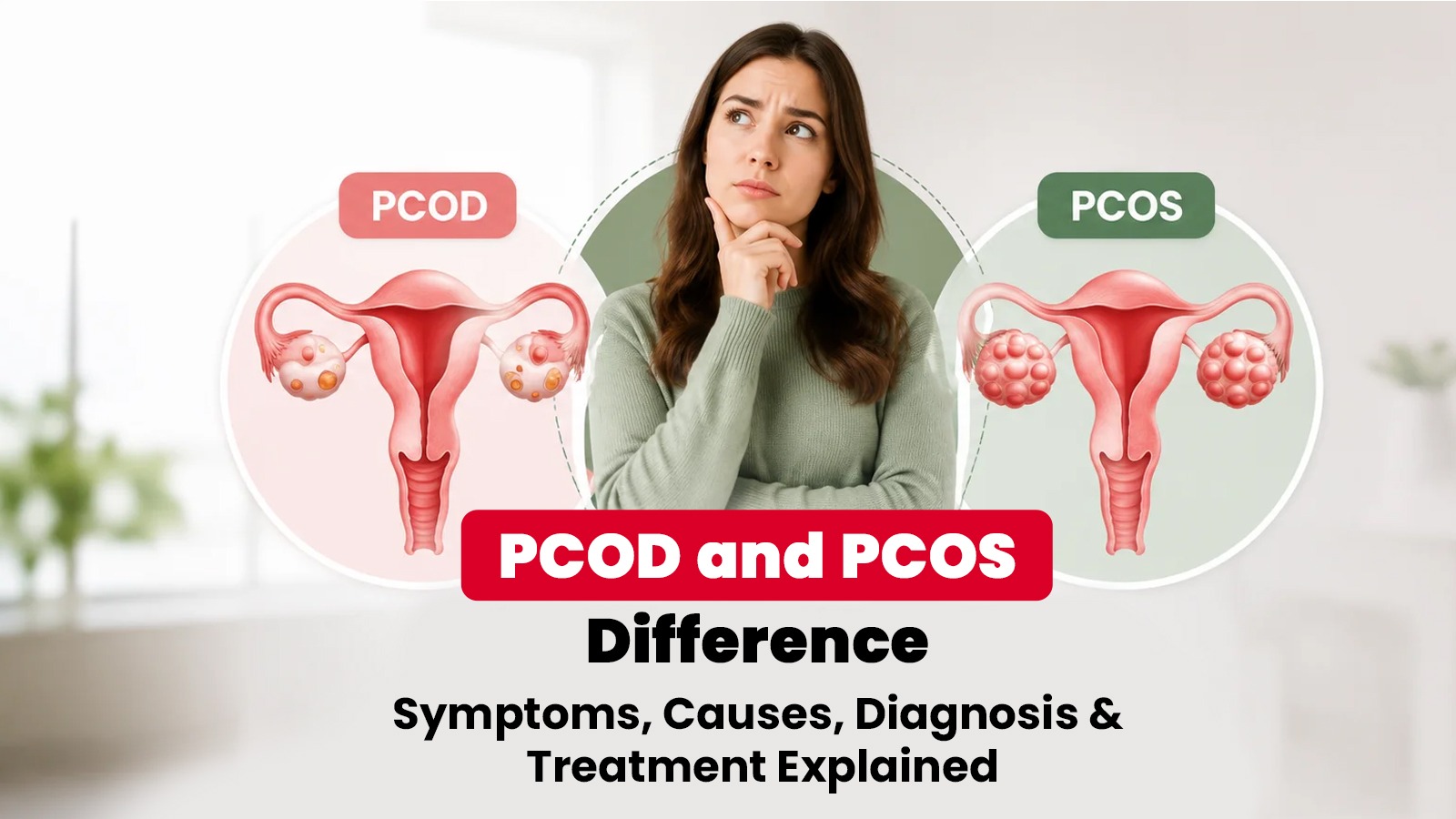
PCOD and PCOS Difference: Symptoms, Causes, Diagnosis & Treatment Explained
Understanding the PCOD and PCOS Difference can be confusing because the terms are often used interchangeably, particularly in everyday conversations. PCOD is commonly used to describe polycystic ovary disease, while PCOS (Polycystic Ovary Syndrome) is the established medical term used in international clinical guidelines. PCOS is a hormonal and metabolic condition that can affect menstrual cycles, ovulation, androgen levels, fertility, and long-term metabolic health.
Many people search for PCOD treatment and Ayurvedic PCOS treatment when experiencing irregular periods, acne, unwanted facial hair, weight changes, or difficulty conceiving. However, these symptoms can have different causes, so proper medical assessment is important before choosing a treatment approach.
At PurshVeda, the approach to women's wellness focuses on understanding individual health history, lifestyle, dietary patterns, symptoms, and available medical reports before developing personalised Ayurvedic guidance.
What Is PCOS?
PCOS, or Polycystic Ovary Syndrome, is a common hormonal condition associated with irregular ovulation, higher androgen activity, and sometimes polycystic ovarian morphology.
PCOS does not affect everyone in exactly the same way. Some women may experience irregular periods and excess hair growth, while others may primarily experience menstrual irregularity, acne, fertility concerns, or metabolic issues. You do not necessarily need to have ovarian cysts to have PCOS.
PCOS can also be associated with insulin resistance, increased risk of metabolic problems, sleep disorders, psychological concerns, and pregnancy-related complications.
What Is PCOD?
PCOD is a term commonly used in India to describe a condition involving ovarian and hormonal changes. In everyday use, it is frequently used interchangeably with PCOS.
However, it is important not to assume that every use of “PCOD” represents a separate medical condition with completely different diagnostic criteria. Current international evidence-based guidance is centred on PCOS as the clinical diagnosis.
Therefore, when someone asks about the PCOD and PCOS Difference, the more useful question is often:
What symptoms and hormonal or metabolic features are present, and what diagnosis has been established by a qualified healthcare professional?
PCOD and PCOS Difference at a Glance
|
Factor |
PCOD |
PCOS |
|
Common usage |
Term frequently used in India |
Established international medical terminology |
|
Meaning |
Often used for ovarian/hormonal irregularities |
Polycystic Ovary Syndrome |
|
Menstrual irregularity |
May be reported |
Common feature |
|
Ovulation problems |
May occur |
Commonly associated with PCOS |
|
Androgen-related symptoms |
May be present |
Can include acne, excess facial/body hair and scalp hair thinning |
|
Metabolic concerns |
May be discussed |
Important part of PCOS assessment |
|
Diagnosis |
Depends on clinical assessment |
Based on established diagnostic criteria after excluding other causes |
|
Treatment |
Depends on symptoms and diagnosis |
Individualised according to symptoms, fertility plans and health risks |
The important point is that PCOD and PCOS should not be treated as two completely separate conditions without considering the individual's clinical findings.
PCOS Symptoms
PCOS can present differently from person to person. Common symptoms and features may include:
- Irregular or infrequent periods
- Missed periods
- Difficulty predicting menstrual cycles
- Difficulty conceiving
- Excess facial or body hair
- Acne or oily skin
- Thinning scalp hair
- Weight gain or difficulty managing weight
- Darkened, thickened skin in some areas
- Signs associated with insulin resistance
Not every woman with PCOS will experience all of these symptoms.
PCOD Symptoms
People who use the term PCOD may describe symptoms such as:
- Irregular menstrual cycles
- Changes in menstrual flow
- Acne
- Weight changes
- Hair growth on the face or body
- Difficulty with ovulation
- Fertility concerns
Because these symptoms can also occur with thyroid disorders, hormonal disorders, stress, changes in body weight, and other conditions, symptoms alone cannot establish whether someone has PCOS or another health condition.
Causes and Risk Factors
The exact cause of PCOS is not fully understood. Multiple factors may contribute, including genetics, hormonal changes, insulin resistance, and other metabolic factors.
1. Hormonal Changes
PCOS can involve increased androgen activity and changes in reproductive hormone signalling. Higher androgen levels may contribute to acne, excess hair growth, and ovulatory problems.
2. Insulin Resistance
Some people with PCOS have insulin resistance, meaning the body's cells do not respond normally to insulin. This can affect blood glucose regulation and may be associated with higher androgen levels.
3. Genetics
A family history of PCOS may increase the likelihood of developing the condition.
4. Lifestyle and Metabolic Factors
Lifestyle factors do not explain every case of PCOS, but nutrition, physical activity, sleep, stress, and body weight can influence metabolic and reproductive health.
A personalised approach is therefore more appropriate than assuming that one single lifestyle factor causes PCOS.
How Is PCOS Diagnosed?
There is no single test that independently confirms PCOS.
Healthcare professionals may consider:
- Menstrual and reproductive history
- Symptoms such as excess hair growth or acne
- Physical examination
- Hormone testing
- Blood glucose or metabolic assessment
- Pelvic ultrasound when appropriate
- Other investigations to rule out conditions that can cause similar symptoms
The 2023 international guideline refined diagnostic criteria and includes adult use of anti-Müllerian hormone (AMH) as an alternative to ultrasound for assessing polycystic ovarian morphology in appropriate circumstances.
A healthcare professional should interpret test results in the context of the individual's age, symptoms, medical history, and other possible causes.
Does Having Ovarian Cysts Mean You Have PCOS?
No.
The name “polycystic ovary syndrome” can sometimes create confusion. Having multiple follicles or cyst-like structures on the ovaries does not automatically mean that someone has PCOS.
PCOS diagnosis involves a combination of clinical features and appropriate assessment rather than ultrasound findings alone.
PCOD Treatment and PCOS Treatment
Treatment depends on the symptoms, reproductive goals, metabolic health, and individual medical circumstances.
Depending on the person's needs, conventional medical management may include:
- Lifestyle and nutrition support
- Management of menstrual irregularity
- Hormonal treatment when appropriate
- Treatment for acne or excess hair growth
- Management of metabolic risk factors
- Ovulation-inducing treatment for people trying to conceive
- Fertility treatment when indicated
There is no single treatment that works for every person with PCOS. Treatment is generally tailored according to symptoms, pregnancy plans, and long-term health considerations.
Ayurvedic PCOS Treatment: An Individualised Approach
People searching for Ayurvedic PCOS treatment may be interested in Ayurveda as a complementary or personalised approach to managing overall wellness.
At PurshVeda, Ayurvedic guidance may consider:
- Individual health history
- Menstrual patterns
- Dietary habits
- Daily routine
- Physical activity
- Sleep patterns
- Stress and emotional wellbeing
- Existing medical reports
- Individual constitution and lifestyle factors
The purpose of an Ayurvedic approach should be to support personalised health management rather than claim that Ayurveda can universally cure PCOS.
If you are already taking medication or receiving treatment from a gynaecologist or endocrinologist, discuss any Ayurvedic medicines, herbs, or supplements with your healthcare professional before starting them.
Lifestyle Support for PCOS
Lifestyle management is an important part of PCOS care. The international guideline emphasises healthy lifestyle, emotional wellbeing, quality of life, and consideration of individual circumstances.
Focus on Balanced Nutrition
A balanced eating pattern can support overall metabolic health.
Depending on individual needs, this may include:
- Vegetables and fruits
- Adequate protein
- Whole grains and fibre-rich foods
- Healthy fats
- Appropriate hydration
- Minimising excessive intake of highly processed foods
There is no single “PCOS diet” that is suitable for everyone.
Stay Physically Active
Regular physical activity can support cardiovascular and metabolic health and may also contribute to overall wellbeing.
Choose activities that are realistic and sustainable, such as:
- Walking
- Yoga
- Strength training
- Cycling
- Swimming
- Other enjoyable forms of movement
Prioritise Sleep
Poor sleep can affect energy, mood, appetite, and overall wellbeing. Maintaining a consistent sleep routine can be a useful part of a broader lifestyle plan.
Manage Stress
Stress does not mean that someone has caused their PCOS, but stress management can support emotional wellbeing and quality of life.
Practices such as breathing exercises, meditation, yoga, hobbies, and regular physical activity may help support a balanced routine.
PCOS and Fertility
PCOS is one of the common causes of ovulatory infertility. Irregular ovulation can make conception more difficult for some women. However, having PCOS does not mean that pregnancy is impossible.
There are evidence-based fertility treatments available, and the appropriate approach depends on the individual and their partner's fertility assessment.
If pregnancy is your goal, discuss your plans with a qualified gynaecologist or fertility specialist.
When Should You Consult a Doctor?
Consider speaking with a qualified healthcare professional if you experience:
- Periods that are consistently irregular
- Periods stopping for several months
- Significant changes in menstrual patterns
- Persistent acne or unwanted hair growth
- Unexplained hair thinning
- Difficulty conceiving
- Significant or unexplained weight changes
- Symptoms suggesting hormonal or metabolic problems
Persistent menstrual irregularity should not automatically be attributed to PCOS because other health conditions can produce similar symptoms.
How PurshVeda Approaches PCOS and PCOD Concerns
At PurshVeda, Online Ayurvedic consultations for PCOS-related concerns focus on understanding the individual rather than using the same approach for everyone.
The consultation may consider:
1. Ayurvedic Doctor Consultation
Discuss your symptoms, menstrual history, lifestyle, and health concerns with a qualified Ayurvedic healthcare professional.
2. Diet & Lifestyle Plan
Develop practical recommendations based on your individual routine and health needs.
3. Psychological & Emotional Wellbeing
Stress and emotional wellbeing can be important parts of comprehensive PCOS care.
4. Individualised Ayurvedic Guidance
Ayurvedic recommendations are considered in the context of your symptoms, health history, constitution, and existing medical care.
You can learn more about PurshVeda's approach on the PCOS/PCOD treatment.
PCOD and PCOS Difference: Key Takeaway
The PCOD and PCOS Difference can be confusing because PCOD is commonly used in everyday discussions, while PCOS is the established clinical terminology used in international guidelines.
Rather than focusing only on the label, it is more important to understand your specific symptoms, menstrual pattern, hormonal profile, metabolic health, and fertility goals.
For people exploring PCOD treatment or Ayurvedic PCOS treatment, professional assessment and an individualised care plan are important. Ayurveda may be considered as part of a personalised wellness approach, but it should not replace necessary medical diagnosis or treatment.
Consult with PurshVeda qualified ayurvedic doctors for personalised guidance.
Comments ( 0 )
Leave A Comment