


Nightfall Is Good or Bad? Understanding Wet Dreams and Nocturnal Emissions
Nightfall is good or bad? This is a common question among men who experience involuntary ejaculation during sleep. Nightfall, also called a wet dream or nocturnal emission, can occur naturally during sleep and does not automatically mean that something is wrong with your sexual or reproductive health. It may happen with or without a remembered sexual dream. However, if nightfall becomes a persistent concern or occurs along with pain, blood in semen, urinary symptoms, unusual discharge, or significant sleep disturbance, professional medical guidance may be appropriate.
At PurshVeda, we believe that understanding your body can help reduce unnecessary fear and misinformation around men's health.
What Is Nightfall?
Nightfall refers to an involuntary ejaculation that occurs while a person is asleep. The medical term commonly used for this phenomenon is nocturnal emission.
A person may wake up and notice semen or moisture on their underwear or bedsheets. Sometimes a sexual dream may be remembered, while in other cases there may be no memory of a dream at all.
Nightfall can occur during adolescence and young adulthood as part of normal sexual development, but adults can also experience nocturnal emissions.
An occasional episode by itself does not necessarily indicate disease, infertility, sexual weakness, or a reproductive problem.
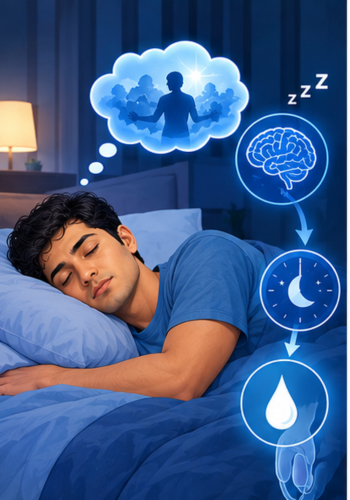
Nightfall Is Good or Bad: Is It Normal?
For many people, occasional nightfall can be a normal physiological occurrence.
There is no universal number of episodes that applies to everyone. Frequency can vary depending on age, individual physiology, sexual development, sleep patterns, and other personal factors.
Rather than worrying only about how many times nightfall occurs, it is more useful to consider:
- Whether there is pain or discomfort
- Whether there is blood in semen
- Whether there are urinary symptoms
- Whether sleep is being significantly disturbed
- Whether anxiety about nightfall is affecting daily life
- Whether there are other ongoing sexual or reproductive symptoms
If you are experiencing persistent concerns, discussing them with a qualified healthcare professional can help identify whether further evaluation is needed.
Why Does Nightfall Happen?
There is no single cause that explains every episode of nightfall.
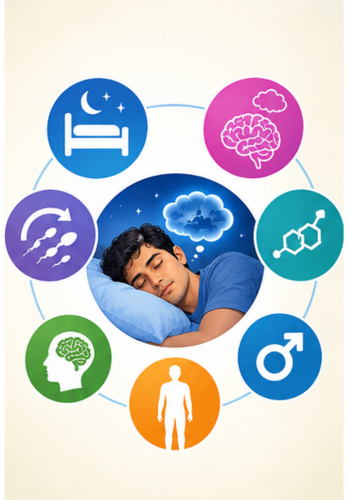
Some factors associated with nocturnal emissions and sexual responses during sleep may include:
1. Natural Sexual Development
Hormonal and reproductive changes during adolescence and young adulthood can be accompanied by nocturnal emissions.
2. Sexual Arousal During Sleep
The body can experience natural sexual responses during sleep, including erections. In some situations, ejaculation may occur involuntarily.
3. Dreams
Sexual dreams may sometimes accompany nightfall, but remembering a sexual dream is not necessary for a nocturnal emission to occur.
4. Individual Differences
Some people experience nightfall occasionally, while others may experience it more or less frequently. Individual variation is normal.
5. Sleep and Lifestyle Factors
Sleep quality, stress, emotional wellbeing, and lifestyle habits may influence overall sleep and wellbeing. However, it is not appropriate to assume that every episode of nightfall has one specific lifestyle-related cause.
For more information, read PurshVeda's detailed guide on [Why Nightfall Happens].
Does Nightfall Cause Weakness?
One of the most common concerns surrounding nightfall is whether semen loss causes physical weakness.
An occasional nocturnal emission does not automatically mean that a person is becoming physically weak or losing their reproductive health.
Many concerns about semen loss, permanent weakness, or loss of masculinity are linked to misinformation. A person's overall energy, stamina, and health depend on multiple factors, including nutrition, sleep, physical activity, stress, general health, and medical conditions.
If you experience persistent fatigue or weakness, it is better to investigate those symptoms separately rather than automatically attributing them to nightfall.
Does Nightfall Reduce Sperm Count?
Nightfall by itself should not be used as a way to determine sperm count or fertility.
Male fertility can be influenced by several factors, including sperm production and quality, reproductive health, hormones, lifestyle, age, and certain medical conditions.
If you are concerned about fertility or sperm health, a proper medical assessment and appropriate testing can provide more useful information than judging fertility based on nocturnal emissions.
You can also explore PurshVeda Male Infertility Treatment for information about professional assessment and Ayurvedic care.
Common Myths About Nightfall
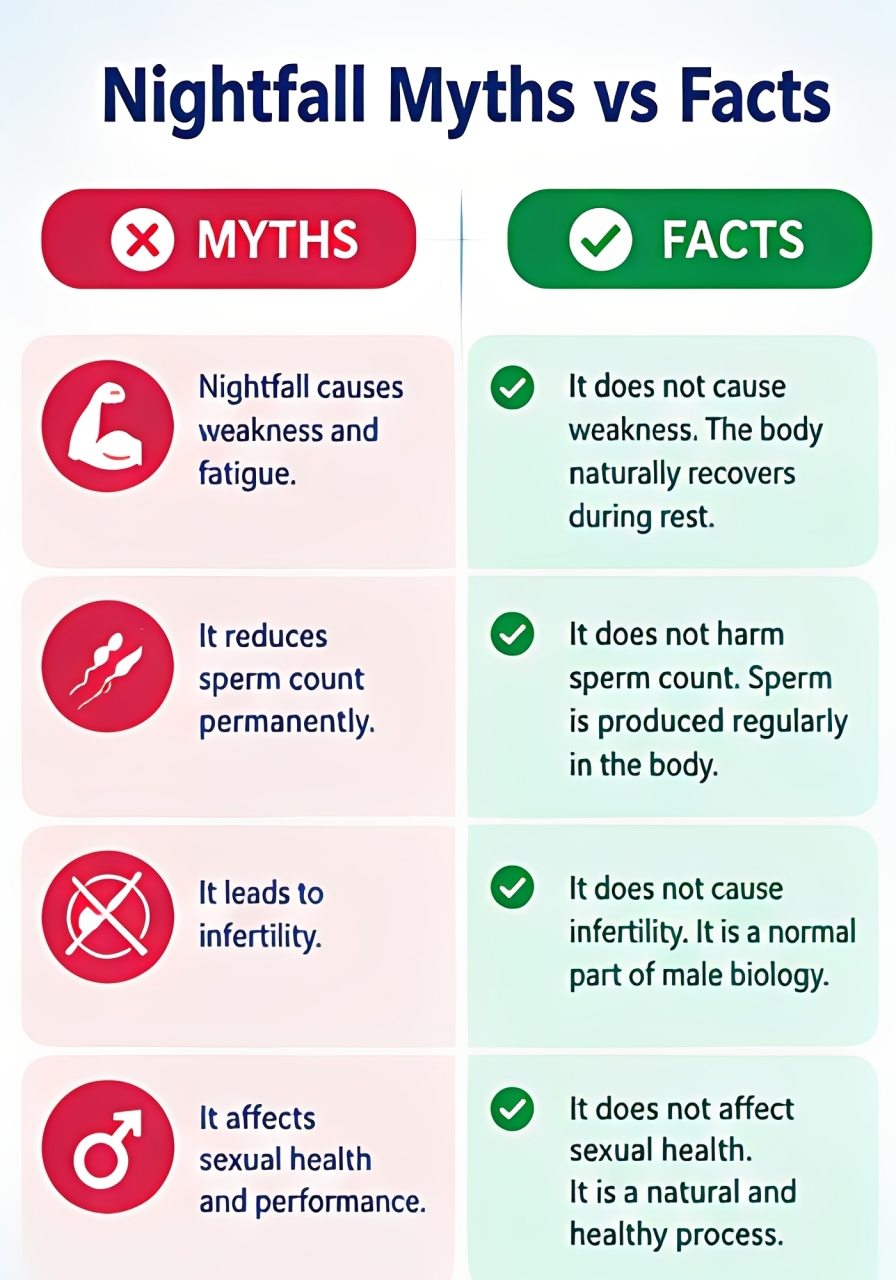
Myth 1: Every Nightfall Episode Is Harmful
Fact: Occasional nocturnal emissions can occur naturally and do not automatically indicate a health problem.
Myth 2: Nightfall Causes Permanent Physical Weakness
Fact: An occasional nocturnal emission does not automatically cause permanent physical weakness.
Myth 3: Nightfall Always Means a Sexual Disease
Fact: Nightfall alone does not mean that a person has a sexually transmitted infection or another sexual disease.
However, symptoms such as genital sores, unusual discharge, painful urination, or persistent pain should be discussed with a healthcare professional.
Myth 4: Nightfall Only Happens After Sexual Dreams
Fact: A person can experience a nocturnal emission without remembering a sexual dream.
Myth 5: Nightfall Means You Are Infertile
Fact: Nightfall alone is not a sign of infertility. Fertility requires assessment of several reproductive factors.
Myth 6: Everyone Needs Treatment for Nightfall
Fact: Occasional nightfall generally does not require treatment simply because it occurred. Professional evaluation becomes more relevant when episodes are distressing, persistent, or associated with other symptoms.
When Can Nightfall Become a Concern?
Although occasional nightfall may be normal, you should pay attention to other symptoms.
Consider consulting a qualified healthcare professional if you experience:
- Persistent or severe pain during or after ejaculation
- Blood in semen
- Burning or pain while urinating
- Unusual genital discharge
- Significant or ongoing sleep disturbance
- Persistent sexual or reproductive symptoms
- Severe anxiety or distress related to nightfall
- Other changes in your general health
These symptoms may have causes unrelated to nightfall itself and may require appropriate evaluation.
Nightfall and Mental Stress
Nightfall can become a source of unnecessary anxiety when people believe common myths about semen loss, weakness, fertility, or masculinity.
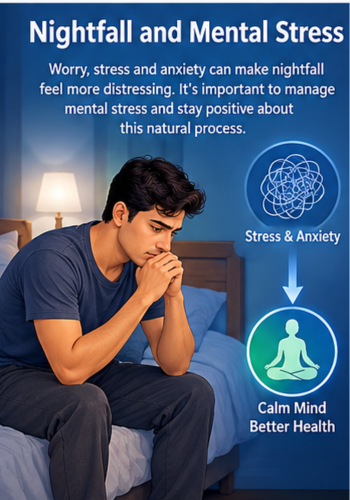
Repeatedly worrying about whether nightfall is normal may affect:
- Confidence
- Sleep quality
- Concentration
- Emotional wellbeing
- Sexual confidence
Education and professional guidance can help separate normal physiological experiences from symptoms that may need further attention.
If stress or anxiety is affecting your sleep or daily life, discussing these concerns with a qualified healthcare professional can be helpful.
Ayurvedic Perspective on Nightfall
Ayurveda takes a broader approach to health by considering an individual's constitution, lifestyle, diet, sleep, digestion, stress, and overall wellbeing.
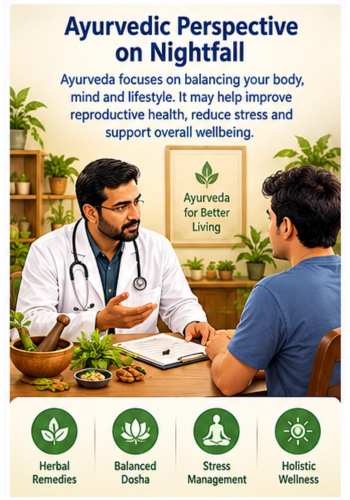
At PurshVeda, concerns related to nightfall can be discussed as part of a personalized men's health consultation. Depending on the individual's situation, an Ayurvedic doctor may review health history, lifestyle habits, sleep patterns, diet, stress, and other relevant factors before providing appropriate guidance.
Ayurvedic care should be personalized rather than based on self-medication or generalized claims that a particular herb or formulation will stop nightfall.
To learn more, visit the PurshVeda Nightfall Treatment.
Lifestyle Habits That May Support Overall Wellbeing
Healthy lifestyle habits may support better sleep and general men's health.

Maintain a Regular Sleep Routine
Try to maintain consistent sleeping and waking times and aim for adequate sleep.
Manage Stress
Meditation, breathing exercises, physical activity, relaxation techniques, and healthy routines may support emotional wellbeing.
Stay Physically Active
Regular physical activity supports general physical and mental health.
Follow a Balanced Diet
Include a varied diet containing vegetables, fruits, whole grains, appropriate protein sources, and healthy fats.
Avoid Unverified Remedies
Be cautious about products, supplements, or online claims that promise an instant cure for nightfall or claim that every episode represents a serious health problem.
Nightfall: When to Worry and When Not to Worry
|
Situation |
What It May Mean |
|
Occasional nightfall |
Can be a normal physiological occurrence |
|
Nightfall during adolescence |
Can occur as part of normal sexual development |
|
Nightfall with a sexual dream |
Can occur as a normal nocturnal emission |
|
Nightfall without remembering a dream |
Can also occur |
|
Nightfall with pain |
Professional evaluation may be appropriate |
|
Blood in semen |
Medical evaluation is advisable |
|
Nightfall with urinary symptoms |
Consult a healthcare professional |
|
Significant anxiety about nightfall |
Consider professional guidance |
|
Persistent sleep disturbance |
Discuss the concern with a healthcare professional |
When Should You Consult a Doctor for Nightfall?
You do not necessarily need to worry about an occasional episode of nightfall.
However, professional consultation may be appropriate if you have persistent concerns or symptoms such as pain, blood in semen, urinary problems, unusual discharge, significant sleep disruption, or ongoing sexual and reproductive concerns.
A qualified healthcare professional can review your symptoms and determine whether additional examination, testing, or treatment is appropriate.
For people who prefer remote care, PurshVeda also provides access to Ayurvedic doctors through online consultations where appropriate.
How PurshVeda Approaches Men's Health Concerns
PurshVeda focuses on understanding men's health concerns in the context of the individual's overall health and lifestyle.
A consultation may involve discussion of:
- Current symptoms and concerns
- Health history
- Diet and nutrition
- Sleep patterns
- Stress and emotional wellbeing
- Lifestyle habits
- Previous treatments
- Relevant medical reports
Based on the consultation, a qualified Ayurvedic professional can determine what type of guidance may be appropriate.
For concerns specifically related to nightfall, explore the PurshVeda Nightfall Treatment.
Final Thoughts: Nightfall Is Good or Bad?
So, nightfall is good or bad? In many cases, occasional nightfall or nocturnal emission can be a normal physiological experience and does not automatically indicate weakness, infertility, or disease.
The important point is to understand your individual symptoms instead of relying on myths or comparing your experience with someone else's.
If nightfall is accompanied by pain, blood in semen, urinary symptoms, unusual discharge, significant sleep disturbance, or persistent anxiety, consider speaking with a qualified healthcare professional.
For a deeper explanation of causes and common misconceptions, read [Why Nightfall Happens].
If you have ongoing concerns about nightfall and men's health, you can also explore PurshVeda's Nightfall Treatment information and consult with a qualified healthcare professional.
Disclaimer: This article is for general educational purposes and should not be considered a diagnosis or substitute for medical advice. Consult with a PurshVeda qualified healthcare professional for personalized guidance based on your individual health condition.

Comments ( 0 )
Leave A Comment