


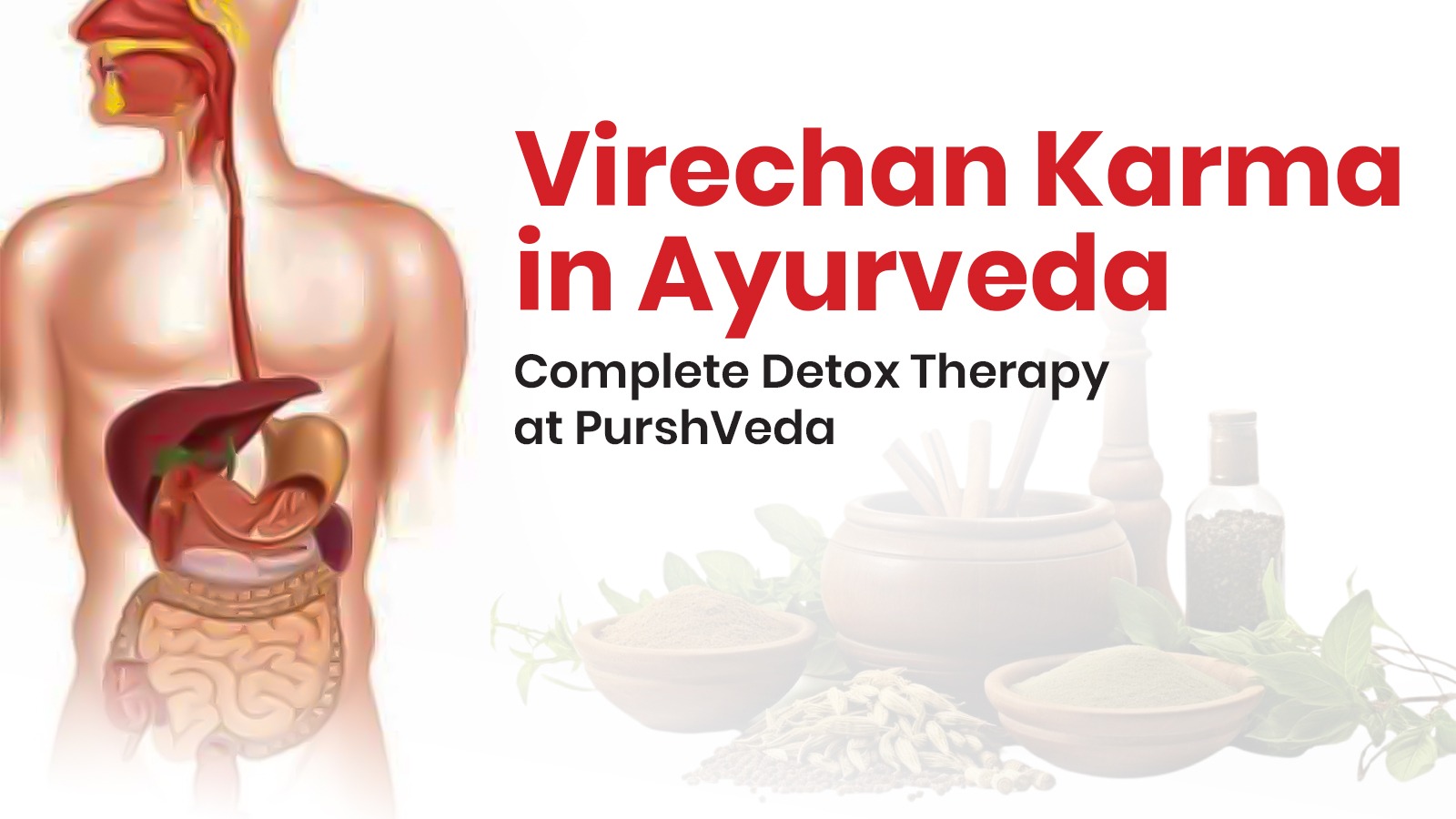
Virechan Karma in Ayurveda: Complete Detox Therapy at PurshVeda
In Ayurveda, detoxification plays a crucial role in maintaining overall health and balance. One of the most powerful cleansing therapies is Virechan Karma, a classical purification treatment that helps remove toxins from the body and restore digestive health.
This therapy is part of Panchakarma, the five-step purification process described in traditional Ayurvedic texts. Virechan primarily removes excess Pitta Dosha, which controls digestion, metabolism, and body heat.
At PurshVeda, Virechan therapy is performed under expert Ayurvedic supervision to ensure safe and effective detoxification for long-term wellness.
What is Virechan Karma?
Virechan Karma is a therapeutic purgation treatment used in Ayurveda to eliminate toxins (Ama) and excess Pitta from the body through the digestive system. Unlike regular laxatives, this therapy is a structured medical procedure that detoxifies the liver, intestines, and blood while restoring internal balance. At PurshVeda, the therapy is customized based on the patient’s body constitution (Prakriti), health condition, and lifestyle.
Ayurvedic Principles Behind Virechan Therapy
According to Ayurveda, the human body is governed by three fundamental energies:
- Vata – Controls movement and nervous system
- Pitta – Controls digestion and metabolism
- Kapha – Controls structure and lubrication
Virechan therapy specifically targets excess Pitta, which accumulates in the digestive tract and can cause issues such as:
- Acidity
- Skin disorders
- Liver problems
- Inflammation
By removing these toxins, Virechan helps restore dosha balance and improve metabolic health.
Step-by-Step Procedure of Virechan Therapy at PurshVeda
1. Purva Karma (Preparation Phase)
Before the detox process, the body is prepared through therapies such as:
- Abhyanga
- Swedana
- Internal intake of medicated ghee or oils
These treatments loosen toxins stored in body tissues and move them toward the digestive tract.
2. Pradhana Karma (Main Detox Procedure)
In this stage, specific Ayurvedic herbal medicines are given to induce controlled purgation. This helps eliminate accumulated toxins through bowel movements while cleansing the liver and intestines. At PurshVeda, this procedure is always performed under expert Ayurvedic doctor supervision.
3. Paschat Karma (Post-Therapy Care)
After detoxification, patients follow a special recovery plan including:
- Ayurvedic diet protocol (Samsarjana Krama)
- Light and easily digestible foods
- Lifestyle and dietary guidance
This helps the digestive system regain strength and maintain long-term balance.
Health Benefits of Virechan Therapy
Virechan therapy offers several health benefits:
- Deep detoxification of liver and intestines
- Improves digestion and metabolism
- Balances Pitta Dosha
- Improves skin health
- Supports hormonal balance
- Boosts immunity
At PurshVeda, this therapy is often recommended as part of holistic Ayurvedic treatment plans.
Conditions Treated with Virechan Therapy
Virechan therapy may help manage various health conditions, including:
- Skin disorders such as acne, eczema, and psoriasis
- Hyperacidity and digestive disorders
- Liver diseases
- Allergies and respiratory problems
- Hormonal imbalance
- Obesity and metabolic disorders
Who Should Consider Virechan Therapy?
Virechan therapy can benefit individuals who:
- Experience chronic acidity or digestive problems
- Have persistent skin conditions
- Want a natural detoxification treatment
- Are seeking Ayurvedic preventive healthcare
Consultation with an Ayurvedic doctor at PurshVeda helps determine whether this therapy is suitable for you.
Who Should Avoid Virechan Therapy?
This therapy may not be suitable for:
- Pregnant women
- Very weak individuals
- Children or elderly without supervision
- Patients with severe dehydration
Always undergo this therapy under professional Ayurvedic guidance.
Lifestyle Tips to Enhance Virechan Results
To maximize the benefits of Virechan therapy:
- Follow a light and warm Ayurvedic diet
- Avoid processed and spicy foods
- Practice yoga and meditation
- Maintain proper sleep and daily routine
These practices support long-term detoxification and wellness.
Virechan Therapy at PurshVeda
At PurshVeda, Virechan therapy is provided as part of a holistic Ayurvedic healing approach.
The treatment includes:
- Personalized Ayurvedic consultation
- Dosha analysis
- Customized detox therapy
- Diet and lifestyle guidance
This integrated approach helps address the root cause of disease rather than only treating symptoms.
FAQs
Is Virechan therapy safe?
Yes, when performed under the supervision of experienced Ayurvedic doctors.
How long does Virechan therapy take?
The complete therapy usually takes 10–15 days, including preparation and recovery.
Is Virechan therapy painful?
No. It is a gentle detox process designed to cleanse the body naturally.
How often should Virechan be done?
It can be done once or twice a year depending on body constitution and health condition.
Can Virechan help with skin diseases?
Yes, it is widely used in Ayurveda for conditions such as acne, eczema, and psoriasis.
Conclusion
Virechan Karma is one of the most powerful detoxification treatments in Ayurveda. By eliminating toxins and balancing doshas, it supports digestive health, skin wellness, and overall vitality. Under expert care at PurshVeda, this therapy becomes a safe and effective way to restore natural health and harmony.

Comments ( 0 )
Leave A Comment